
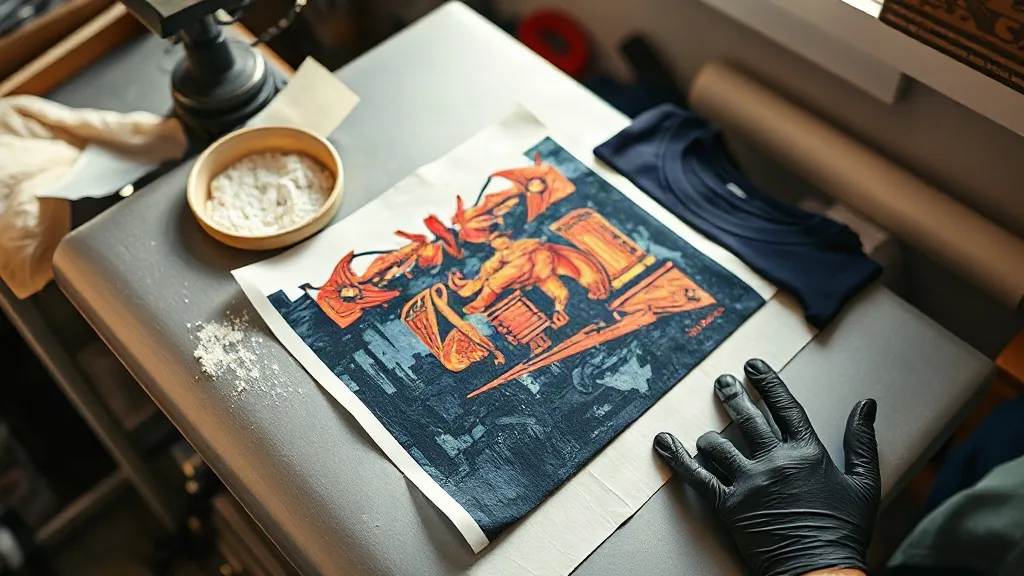
If you have ever ordered a single custom shirt for a team event and been quoted a setup fee larger than the shirt itself, you already understand why dtf transfers changed the small-batch apparel business. Direct-to-film printing skips screens, skips minimums, and skips the long back-and-forth with a print shop. You send a file, you get a printed sheet of film, and a heat press does the rest. That simplicity is real, but it is not automatic. The difference between a transfer that survives fifty washes and one that peels on the second is mostly in the details nobody explains up front.
This guide covers what dtf actually is, which fabrics it handles well, the press settings that matter, and the mistakes that account for most failed jobs. If you run a small shop, print for a club, or just want to stop paying per-color fees, this is the practical version.
What DTF Printing Actually Does
Direct-to-film is a digital process with three moving parts: a printer, a sheet of PET film coated with a release layer, and a thermoplastic adhesive powder. The printer lays down color inks and then a white ink layer on top of the film. While the ink is still wet, the sheet is dusted with adhesive powder, shaken, and cured. What you end up holding is a flexible, transferable image with a white backing already built in.
That white layer is the reason DTF works on dark garments. Screen printing needs a separate white screen and a flash cure to lay down an underbase. DTF bakes the underbase into the film. You press the whole stack once and the white travels with the color.
Film, powder, and press: the three variables
Most quality problems trace back to one of these three. Cheap film releases poorly and leaves adhesive residue on the garment. Under-cured powder turns sticky and clogs the wash. An uneven press gives you patchy adhesion on one side and scorched polyester on the other. If you are troubleshooting, change one variable at a time rather than adjusting press temperature and powder cure together.
Which Fabrics Take DTF Well
Cotton, cotton-poly blends, and 100% polyester all accept DTF transfers. That flexibility is the main reason the method spread so fast through the promotional and team apparel world. A shop can keep one printer and serve a customer ordering cotton tees, polyester hoodies, and blended polos in the same run.
There are limits worth knowing before you promise a client the world.
- Nylon and coated synthetics: adhesion is unreliable, especially on water-resistant finishes. Test a scrap before committing.
- Mesh and heavily textured fabrics: the film cannot reach into the weave, so coverage looks broken.
- Stretch fabrics: DTF stretches reasonably, but a print that crosses a seam will pull. Keep art away from high-flex zones.
- Fleece and terry: works, but the pile can push through the ink. A slightly higher press pressure helps.
One more practical point: DTF sits on top of the fabric rather than soaking in like dye. On very light, thin cottons a large solid print will feel stiffer than a screen print would. Designers who plan for breathable areas in the artwork get a better-wearing garment.
Press Settings That Produce Durable Results
Every film supplier publishes a temperature and time window, and those windows are a starting point, not a guarantee. Your press, your platen, and your garment thickness all shift the result. The settings below are a sensible baseline for a typical clamshell or swing-away press.
Baseline press recipe
- Pre-press the garment for 5 to 7 seconds to pull out moisture. Damp fabric is a common cause of poor adhesion.
- Set the press to roughly 150 to 160 degrees Celsius (300 to 320 Fahrenheit).
- Place the transfer with the printed side down and press for 10 to 15 seconds at medium to firm pressure.
- Let the sheet cool until it is warm but no longer hot, then peel. Peeling hot can distort fine lines.
- Cover with a protective sheet or parchment and press again for 5 to 8 seconds to lock the adhesive into the fibers.
The second press is the step most people skip, and it is the one that most affects wash durability. The first press transfers the image. The second press sets the adhesive into the weave so the print does not lift at the edges.
Peel temperature matters more than people think
Cold peel suits dense, detailed artwork. Warm peel suits large solid areas where you want the film to release cleanly without dragging. If you are getting jagged edges on small text, try peeling cooler. If the film is fighting you on a big block of color, let it warm up slightly. This single adjustment fixes a surprising share of complaints about fuzzy lettering.
Where to Source Transfers, and What to Check
Plenty of people print their own film in-house, but the equipment, powder handling, and curing space are a real commitment. For shops that want the process without the capital outlay, ordering gang sheets from a transfer supplier is the practical route. That is also where searches for dtf transfers near me usually lead, and it is worth being picky about who you choose.
Ask these questions before placing a recurring order:
- What ink system do they use, and is the white layer opaque enough for dark garments?
- Do they cure powder properly, or does the film arrive tacky?
- How tight is their color matching on repeat orders?
- What is the turnaround on a gang sheet, and do they accept mixed artwork on one sheet?
- Will they replace a sheet that fails in the wash within a reasonable window?
A supplier who answers all five without hedging is usually a supplier worth keeping. The ones who dodge the powder cure question tend to produce film that looks fine on arrival and fails two weeks later.
Common Mistakes and How to Avoid Them
After enough jobs, the failure patterns become predictable. Here are the ones that show up most often.
Printing too close to the garment edge
The press platen needs flat surface under the entire transfer. A print that runs over a hem or a side seam will not bond evenly, and it will lift there first. Leave at least a centimeter of margin, more on curved areas.
Ignoring moisture
Cotton holds ambient humidity. A shirt pulled straight from a cool storage room and pressed immediately can trap vapor under the film. The pre-press step exists for this reason. It takes seconds and prevents a whole category of adhesion problems.
Stacking transfers too soon
If you are pressing a batch, give each garment a moment to cool before stacking. Stacking warm prints face-to-face transfers adhesive onto the garment underneath and leaves a dull patch.
Over-stretching during application
Some operators stretch the garment tight over the platen to smooth wrinkles. That works against you. Press on a flat, relaxed surface, and smooth wrinkles with your hand rather than tension.
Wash and Care Guidance for Customers
Give buyers a short care card with every DTF order. It reduces returns and it makes your shop look professional. The essentials: wash inside out in cold water, avoid fabric softener on the printed area, tumble dry low or hang dry, and never iron directly on the print. A pressing cloth over the design is fine if the customer needs to smooth a wrinkle. Most DTF prints that fail in the wash were washed hot, dried hot, or ironed face-up.
Frequently Asked Questions
How long do DTF transfers last on a shirt?
With a proper second press and cold-water washing, most quality transfers hold up for dozens of wash cycles. Longevity depends far more on application and care than on the print itself. A well-pressed transfer washed cold will outlast a poorly pressed one washed hot by a wide margin.
Can I use DTF on 100% polyester without scorching it?
Yes, but polyester is heat sensitive. Stay at the lower end of the temperature range, use a protective sheet, and test on a scrap of the same fabric. Some polyester dye lots also bleed under heat, so a quick test press saves a ruined garment.
Is DTF cheaper than screen printing for small orders?
For runs under roughly two dozen pieces, DTF almost always wins because there are no screens, no per-color charges, and no setup fee. Above a few hundred identical pieces, screen printing usually becomes the cheaper option per unit. The crossover point depends on your local pricing, so price out both for any order large enough to matter.
Do I need a special heat press for DTF?
No. A standard heat press with adjustable temperature and pressure handles DTF fine. What matters is even pressure across the platen and an accurate temperature reading. A press with a worn or uneven platen will produce inconsistent results no matter how good the film is.
Can DTF transfers be applied to hats and bags?
They can, but curved and structured items need a smaller platen or a hat attachment. The transfer has to sit flat against the surface during pressing. On a curved cap, a standard flat platen will only make contact in the middle, which is why dedicated attachments exist.
The short version: DTF rewards preparation. Dry the garment, press twice, peel at the right temperature, and buy film from someone who cures their powder properly. Do those four things and the method delivers exactly what it promises, which is fast, affordable, full-color decoration without the setup costs of traditional printing.