
When you're running a print-on-demand business, choosing the right printing method can make or break your customer satisfaction and profit margins. Among the many options, DTF printing has emerged as a game-changer, offering unparalleled versatility and vibrant results. Whether you're a seasoned entrepreneur or just starting out, understanding DTF printing can elevate your product quality and streamline your operations. In this guide, we'll dive deep into what DTF printing is, why it's ideal for print on demand, and how to implement it effectively.
What is DTF Printing?
DTF stands for Direct-to-Film. It's a printing technique where your design is printed onto a special film, coated with adhesive powder, and then heat-pressed onto the fabric. Unlike DTG (Direct-to-Garment) or screen printing, DTF doesn't require pre-treatment of the garment, and it works on a wide range of materials, including cotton, polyester, blends, and even leather. The process involves a few key steps: designing, printing on film, powdering, curing, and pressing. This method has gained massive popularity in the print-on-demand world because it eliminates many of the limitations of other techniques.
Why DTF Printing is a Game-Changer for Print on Demand
Print on demand is all about efficiency, customization, and low upfront costs. DTF printing checks all these boxes and more. Here's why it stands out:
- No color limitations: DTF can reproduce full-color designs, gradients, and fine details with exceptional vibrancy, unlike screen printing which requires separate screens for each color.
- Fabric versatility: You can print on almost any fabric type, from 100% cotton to polyester and blends, without worrying about dye migration or adhesion issues.
- Cost-effective for small batches: With no minimum order quantity, DTF is perfect for on-demand production. You only print what you sell, reducing inventory waste.
- Durability: When applied correctly, DTF prints are stretchable, crack-resistant, and can withstand repeated washing.
- Simplified workflow: No need for weeding or cutting like with vinyl, and no pre-treatment like DTG, saving time and labor.
These advantages make DTF an excellent choice for businesses that offer personalized apparel, such as custom t-shirts, hoodies, tote bags, and more.
Step-by-Step DTF Printing Process
To achieve professional results, follow this detailed workflow. Each step is crucial for a flawless transfer.
1. Design Preparation
Start with a high-resolution image (300 DPI recommended). Ensure your design is mirrored horizontally because the film will be flipped during pressing. Use design software like Photoshop or Illustrator to prepare the artwork. Remember that DTF can handle intricate details, so don't shy away from complex designs.
2. Printing on Film
Load your DTF printer with specialty film. The printer uses pigment-based inks (CMYK plus white) to print the design onto the film. The white ink layer is essential for opacity on dark fabrics. Ensure your printer is calibrated and the ink is properly agitated to avoid clogging.
3. Applying Adhesive Powder
While the ink is still wet, sprinkle hot-melt adhesive powder evenly over the printed design. Shake off excess powder gently. This powder will bond the ink to the fabric during heat pressing.
4. Curing the Powder
Place the film in a curing oven or under a heat press at around 160°C (320°F) for 2-3 minutes, or until the powder melts and becomes glossy. This step is critical; under-curing leads to wash-off, while over-curing can make the transfer brittle.
5. Heat Pressing
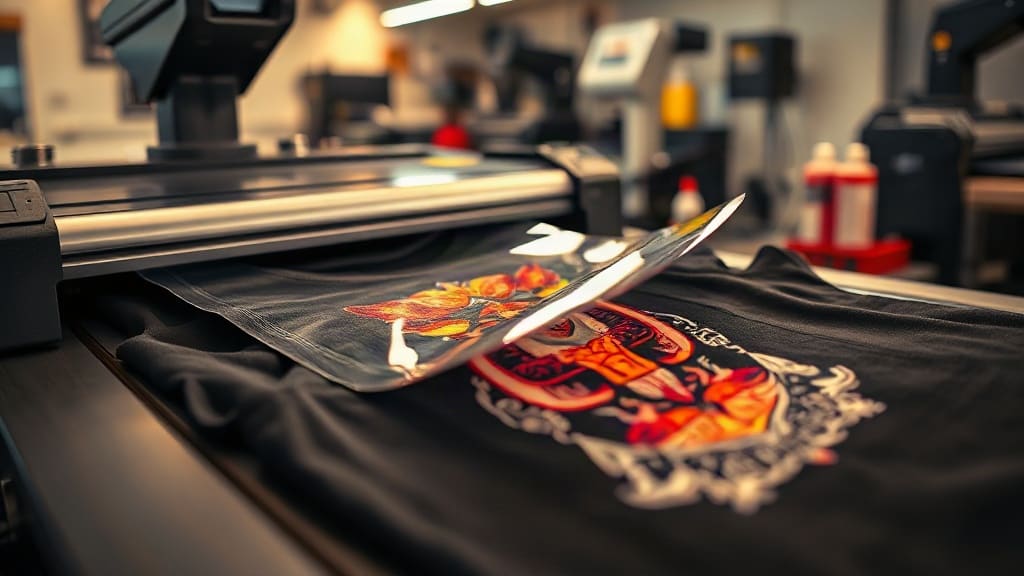
Set your heat press to 160°C (320°F) with medium pressure. Pre-press the garment for a few seconds to remove moisture. Place the DTF transfer on the fabric with the design facing up. Press for 15-20 seconds. Then, peel the film off while it's still hot (hot peel) or after it cools (cold peel), depending on the film type. Finally, press again for 5-10 seconds with a protective sheet to enhance durability.
Common Challenges and How to Overcome Them
Even with a solid process, issues can arise. Here are frequent problems and their solutions:
- Ink cracking: Usually caused by insufficient powder or under-curing. Ensure even powder application and proper curing temperature.
- Poor adhesion: May result from insufficient pressure or pressing time. Check your heat press calibration and increase pressure if needed.
- Color fading: Use high-quality inks and films. Also, avoid over-stretching the garment during pressing.
- Film peeling issues: If the film doesn't peel cleanly, it might be due to incorrect peel temperature. Try hot peel or cold peel based on film specifications.
By troubleshooting systematically, you can maintain consistent quality.
DTF vs. Other Printing Methods: A Comparison
How does DTF stack up against DTG, screen printing, and vinyl? Let's break it down:
- DTG: Best for 100% cotton, but requires pre-treatment and can be less durable. DTF works on more fabrics and often yields more vibrant colors.
- Screen Printing: Cost-effective for large orders but expensive for small batches and limited in color complexity. DTF excels in small batches and full-color designs.
- Vinyl: Great for simple text and shapes but labor-intensive for multi-color designs. DTF handles complex artwork effortlessly.
For print-on-demand, where orders are typically one-offs or small runs, DTF offers the best balance of quality, versatility, and cost.
Essential Equipment for DTF Printing
To get started, you'll need:
- A dedicated DTF printer (e.g., Epson F2100 or converted Epson models).
- DTF film (PET film).
- Hot-melt adhesive powder.
- Curing oven or heat press.
- Heat press for transferring.
- Design software.
Invest in quality equipment to avoid constant troubleshooting. Many suppliers offer starter kits that include everything you need.
Tips for Scaling Your DTF Print on Demand Business
Once you've mastered the basics, you can grow your business with these strategies:
- Offer a wide range of products: Beyond t-shirts, add hoodies, leggings, caps, and even non-apparel items like mousepads.
- Optimize your workflow: Batch similar orders together to reduce setup time. Use software to automate order processing.
- Market your unique designs: Leverage social media and niche communities to showcase your creativity.
- Maintain quality control: Regularly test washability and stretchability to ensure customer satisfaction.
- Partner with reliable suppliers: Ensure a steady supply of films, powders, and inks to avoid disruptions.
With DTF, you can offer high-quality custom products without the overhead of traditional printing methods.
Frequently Asked Questions About DTF Printing
What fabrics can I use with DTF printing?
DTF printing works on a wide range of fabrics, including cotton, polyester, cotton-poly blends, nylon, leather, and even some synthetic materials. It's particularly useful for dark and colored garments because the white ink layer provides opacity.
How durable is a DTF print?
When properly applied, DTF prints are highly durable. They can stretch with the fabric without cracking and withstand multiple washes. To maximize longevity, wash garments inside out in cold water and avoid ironing directly on the print.
Do I need to pre-treat garments for DTF?
No, pre-treatment is not required for DTF printing. This is a significant advantage over DTG printing, which often requires pre-treatment for best results. Simply press the transfer onto the fabric.
Can I use DTF on dark colors?
Absolutely! DTF excels on dark colors because the white ink layer acts as a base, making the colors pop. Just ensure your printer is set to print the white layer correctly.
What is the cost per print for DTF?
The cost varies based on design size, ink usage, and materials. On average, a small to medium-sized DTF transfer costs between $0.50 and $2.00, making it very affordable for print on demand.
How do I store DTF transfers?
Store unused DTF transfers in a cool, dry place, away from direct sunlight. Keep them in a sealed bag to prevent dust and moisture. Properly stored transfers can last for several months.
Conclusion
DTF printing is transforming the print-on-demand industry by offering unmatched versatility, vibrant colors, and cost efficiency. By understanding the process, overcoming common challenges, and following best practices, you can deliver exceptional products that keep customers coming back. Whether you're just starting or looking to expand, integrating DTF into your business can set you apart in a competitive market. So, invest in the right equipment, refine your technique, and watch your print-on-demand venture thrive.